IB Biology Sub-topic C4.2 Notes
Ecosystems
A huge focus on Topic 4 is ecology, defined as the study of ecosystems, and you are expected to know them in detail. An ecosystem is the interaction of a community with its abiotic environment. Within this:
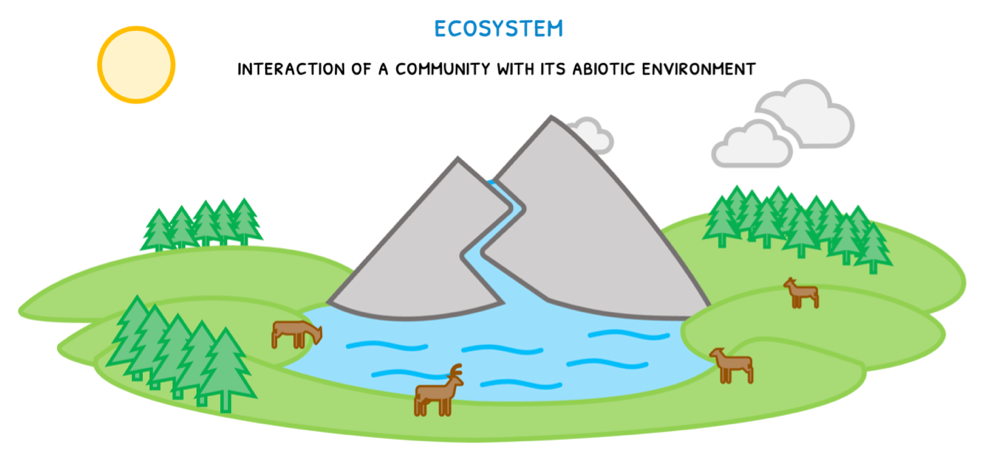
- The nutrient supply is maintained via cycles, making it extremely sustainable.
- The energy supply is not maintained, as energy is able to pass in as sunlight and pass out as heat.
By definition, this makes ecosystem closed systems, as energy is able to move in or out, but matter is not (for the most part). Remember that sunlight is the principal source of energy that sustains each ecosystem on the planet, with exception of:
- Caves - deep enough, sunlight is unable to reach and provide energy for the ecosystem. Energy thus enters in the form of entering animals or debris that has washed in.
- Deep water - deep enough, sunlight does not penetrate either and thus it does not provide energy. Energy thus enters in the form of dead animals that have sunk into the deep ocean.
Food networks
Within each ecosystem, all organisms that live within it need energy. Thus, energy needs to flow through complex feeding networks, which can be represented using food webs.
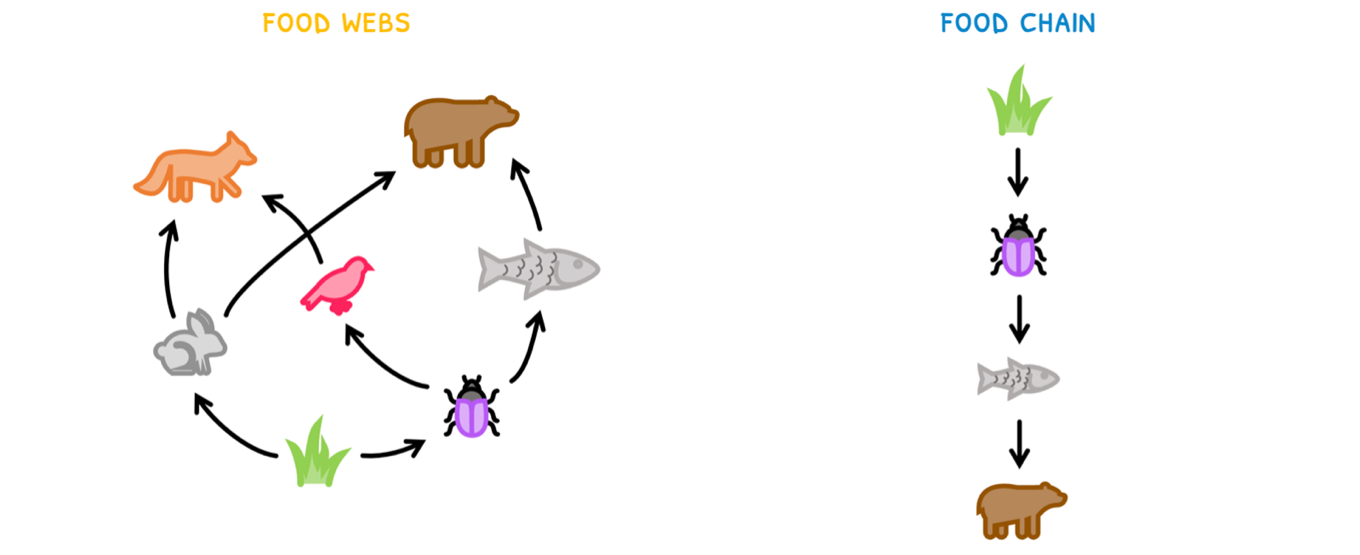
Each individual route within a food web is called a food chain, so you can see that a food web is composed of many food chains.
Modes of nutrition
In these food webs, species can be divided into three types based on their mode of nutrition: autotrophic, heterotrophic, and mixotrophic.
- Autotrophs obtain energy by converting inorganic compounds into organic compounds via photosynthesis. Examples include plants, algae, and cyanobacteria.
- Heterotrophs obtain energy by consuming other organisms. There three types:
- Consumers - these directly consume other living organisms and perform internal digestion and absorption of their compounds.
- Detritivores - these directly consume decomposing matter or organisms and perform internal digestion and absorption of their compounds.
- Saprotrophs - these secrete digestive enzymes onto dead organic matter for external digestion, and then absorb the products.
- Mixotrophs are both autotrophs and heterotrophs. An example is a Venus fly trap.