IB Biology Sub-topic A4.1 Notes
Evolution
Topic 4 focuses on ecosystems and changes within them. In the context of organisms, the changes they undergo are mostly due to evolution. This is the change in heritable characteristics of a species over time.
Given evolution's previously controversial history since its proposition of theory in the mid 19th-century by Charles Darwin and Alfred Russel Wallace, it is important to understand the process.
The theory of evolution by natural selection is governed by four tenets:
- More offspring are produced than can survive.
- Morphology, physiology, and behavior greatly varies between individuals.
- Different traits results in different rates of survival and reproduction.
- Traits are passed down generations.
Evidence for evolution
The evidence for evolution is provided by several key pieces of information, including:
- Base sequences
- The fossil record
- Selective breeding
- Homologous structures
Base sequences are the most used evidence for evolution. RNA and DNA base sequences or amino acid sequences in proteins can be determined in any species, and taken from fossils. This allows scientists to relate species together on the basis of how different these base sequences are and determine how long ago two species shared a common ancestor. Since this is such a powerful tool, sequence data is the most relied upon evidence of common ancestry.
The fossil record supports evolution for four reasons:
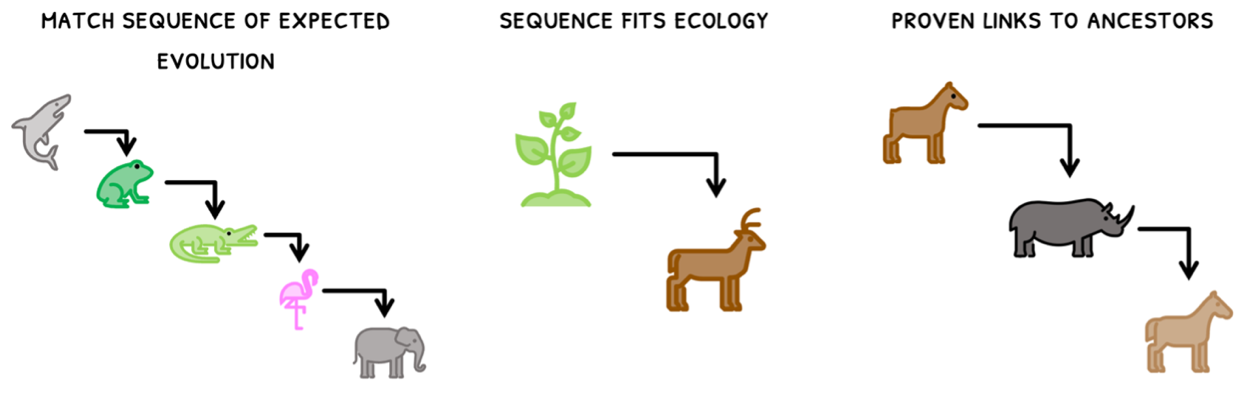
- The fossil record shows a sequence of expected developing complexity over time. For example, from to fish to amphibians to reptiles to birds to mammals.
- This sequence also matches the ecology. For example, plants appeared before animals adapted to survive on plants appeared.
- Many existing species have proven links to their ancestors. For example horses formed from rhinos, which formed from Hyracotherium.
- Additionally, it suggests that many species no longer exist, suggesting a change in organisms over time.
Selective breeding is the process by which organisms with desired characteristics are selected and bred together. This mostly occurs in domesticated animals, such as cows or horses, and is also called artificial selection.
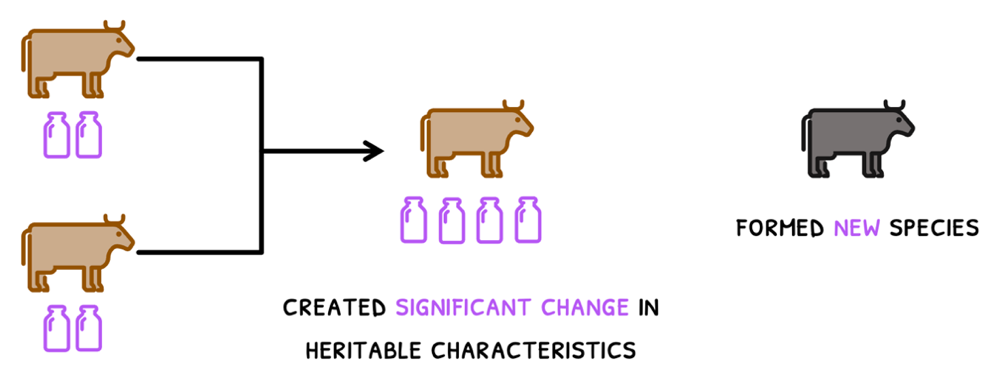
It supports evolution because:
- It shows how the heritable characteristics of a species can change over time.
- Sometimes, it is even able to form new species.