IB Biology Sub-topic D4.2 Notes
Ecosystem stability
Ecosystem stability is the ability of an ecosystem to maintain its structure and function over long periods of time and despite disturbances. It is a natural property of an ecosystem that is the product of multiple factors since ecosystems are dynamic and subject to constant change.
Whilst some factors are cyclical, such as seasons, others longer, ecosystems tend to remain stable over extremely long-time frames. The key requirements for ecosystem stability are:
- Sufficient genetic diversity
- Sufficient energy supplies
- Nutrient recycling
- Climatic variables within tolerance levels
However, any shift in biotic or abiotic factors can bring diversion from the seasonal norms. Natural cycles, natural disasters, and human activity are all capable of altering ecosystem stability.
If an ecosystem reaches a tipping point, defined as a point of no return, the feedback mechanisms that maintain ecosystem stability are irreversibly damaged and cause rapid change within that ecosystem.
A key example you need to be aware is deforestation of the Amazon rain forest. Scientists predict that if deforestation in the Amazon reaches 20-25% a tipping point will be reached. This is of great concern as it already stands at 17% deforestation. Of further global concern is the loss of biodiversity that accompanies deforestation since species biodiversity is highest in the tropics, and habitat loss puts many species at risk of becoming endangered or even extinct.
The reasons for deforestation are largely socioeconomic, and in tropical regions subsistence farming is a major culprit. The clearing of land for commercial agriculture, to include ranching and palm oil plantations, results in revenue for governments through taxes and permits. This becomes an incentive to clear more forests. Some 14% of Amazon deforestation is also attributed to logging, although illegal logging may also push this percentage up even higher.
Mesocosms are able to model an ecosystem's sustainability as artificial miniature versions of them. Their main use is in the investigation of how different factors affect that sustainability. From these experiments, it became evident that to maintain themselves, mesocosms must contain:
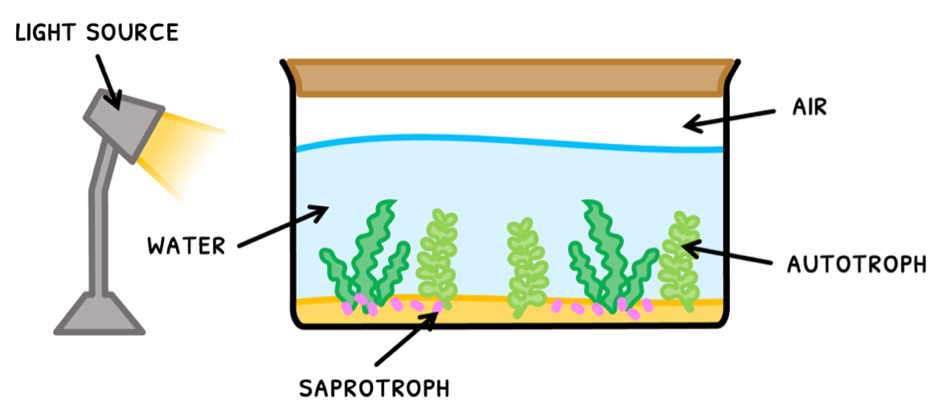
- A light source to initiate photosynthesis as the entry point of the energy cycle.
- Air to provide oxygen and other gases needed for life.
- Water needed for life.
- An autotroph to perform photosynthesis and take up nutrients and minerals from the soil.
- A saprotroph or detritivore to decompose waste material and dead organisms, returning nutrient and minerals to the ground and essential gases to the air.