IB Biology Sub-topic C1.3 Notes
This page contains our IB Biology notes for sub-topic C1.3. By reading each one of these notes, you will fully cover the content for IB Biology 'Photosynthesis'.
Loading progress...
Photosynthesis
Whilst respiration uses oxygen and organic compounds to produce energy, photosynthesis does nearly the opposite. It is the production of organic compounds and oxygen from light, CO2, and water. This reaction is only conducted in certain types of organisms - namely plants, algae, and cyanobacteria. The specific reaction they undergo is:
CO2 + H2O → glucose + O2
A summary of the process is:
- First, light energy is absorbed by photosynthetic pigments called chlorophyll.
- This energy is used to split water molecules in a process called photolysis, producing electrons and oxygen as waste.
- Finally, the electrons are used to convert CO2 into organic compounds (glucose).
HL students need to learn a more detailed process.
Factors of photosynthesis
Next, it is important to consider the impact of several factors on photosynthesis. The main factors include temperature, light intensity, and carbon dioxide concentration.
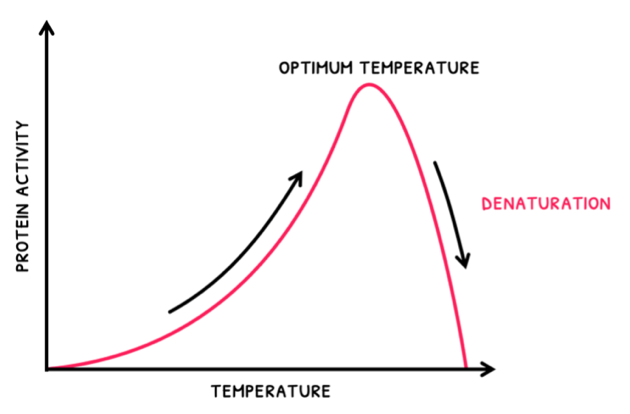
- As temperature increases, rate increases to a maximum at an optimum temperature. After this, as temperature increases, rate decreases as enzymes become denatured.
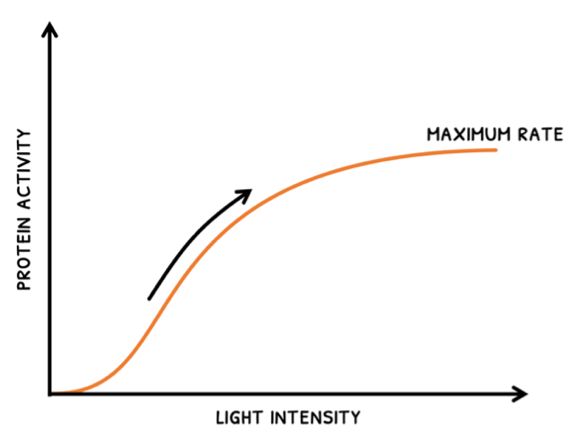
- As light intensity increases, rate increases up to a maximum rate. After this, an increase in intensity does not affect rate because another factor will become limiting.
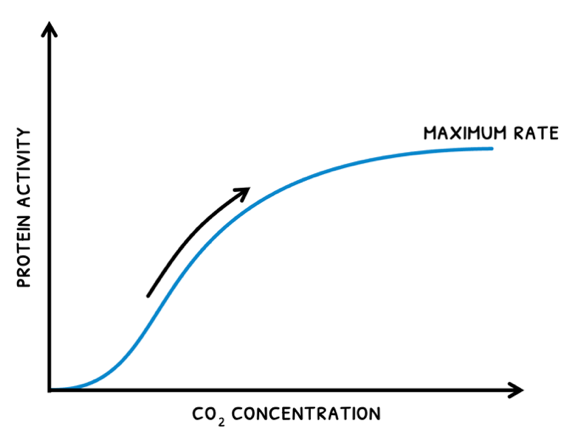
- As CO2 concentration increases, rate increases up to a maximum rate. After this, an increase does not affect rate because another factor will become limiting.
tibertutor.com
Great Work!
You have now covered all of our sub-topic C1.3 notes, covering "Photosynthesis" for IB biology.
Now that you have completed these IB biology sub-topic C1.3 notes, covering "Photosynthesis", dive into our sub-topic C1.3 flashcards for the IB biology course.
IB biology sub-topic C1.3 flashcards
Explored IB Biology?
Get stuck into one of our other subjects!
Join 85,000 students, across 130+ countries, in 500+ IB schools. That's half of the IB science graduates worldwide.
Start a 7d free trial